How to Choose the Best Organic Products Online
Buying organic products online has become easier because customers can explore different products, compare prices and read product details from home. However, choosing the right product can be confusing. Many products use words such as natural, pure, chemical-free and organic, but these words do not always mean the same thing.
If you want to buy organic food products online, it is important to check the product label, ingredients, certification, freshness and seller information before placing an order.
This guide explains how to choose the best organic products online and what to check before buying them. Whether you are shopping for your family or trying organic products for the first time, these simple tips can help you make a better choice.
1. Understand What Organic Products Mean
Before buying organic products online, understand what organic means. Organic products are produced or cultivated by following established organic farming and production guidelines. In organic farming, the focus is on soil health, biodiversity and approved farming practices.
For food products in India, organic claims should be supported by the applicable organic standards and requirements. Certified organic food meets recognised organic standards, unlike products labelled only as natural or traditional.
For example, a food product labelled as natural is not automatically certified organic. Similarly, a product with attractive packaging and green colours does not prove that it meets organic standards.
What should you check?
- Read the product description carefully.
- Check whether the seller explains how the product is sourced.
- Look for relevant organic certification details.
- Avoid making a decision based only on words such as pure or natural.
Understanding these differences is the first step towards choosing suitable organic products.
2. Check Organic Certification and Product Labels
One of the most important steps when shopping for organic food online is checking its certification and label. Certification helps customers identify products that follow recognised organic production standards.
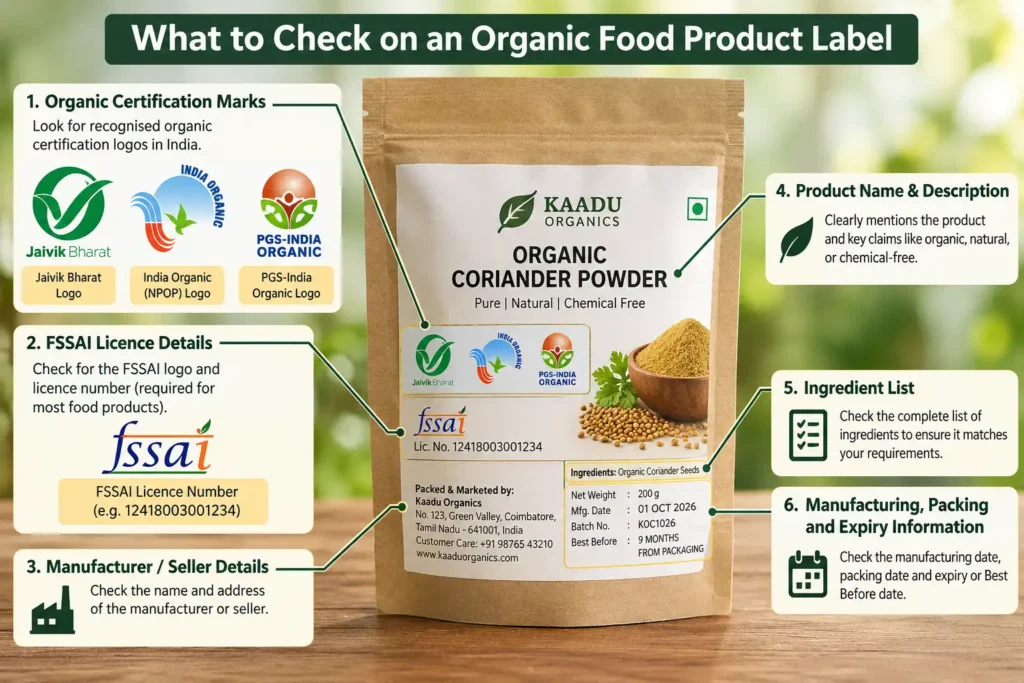
In India, look for the Jaivik Bharat logo and the applicable certification details. Depending on the certification system, labels may include the India Organic logo under the National Programme for Organic Production (NPOP) or the PGS-India Organic logo.
Also check the Food Safety and Standards Authority of India (FSSAI) logo and licence number, where applicable.
Before buying, look for:
- Organic certification marks relevant to the product.
- The manufacturer’s or seller’s details.
- An FSSAI licence number, where required.
- A complete ingredient list.
- Manufacturing, packing or expiry information, as applicable.
For packaged organic foods, you can also check the certification details against the official Jaivik Bharat portal. This portal provides information about organic food standards and allows users to search for products and businesses.
Remember that certification requirements can vary depending on the product and applicable rules. If the label is unclear, ask the seller for more information before ordering.
3. Read the Ingredients Before Buying
A product’s name does not always tell you everything about what is inside it. Reading the ingredient list helps you understand what you are buying.
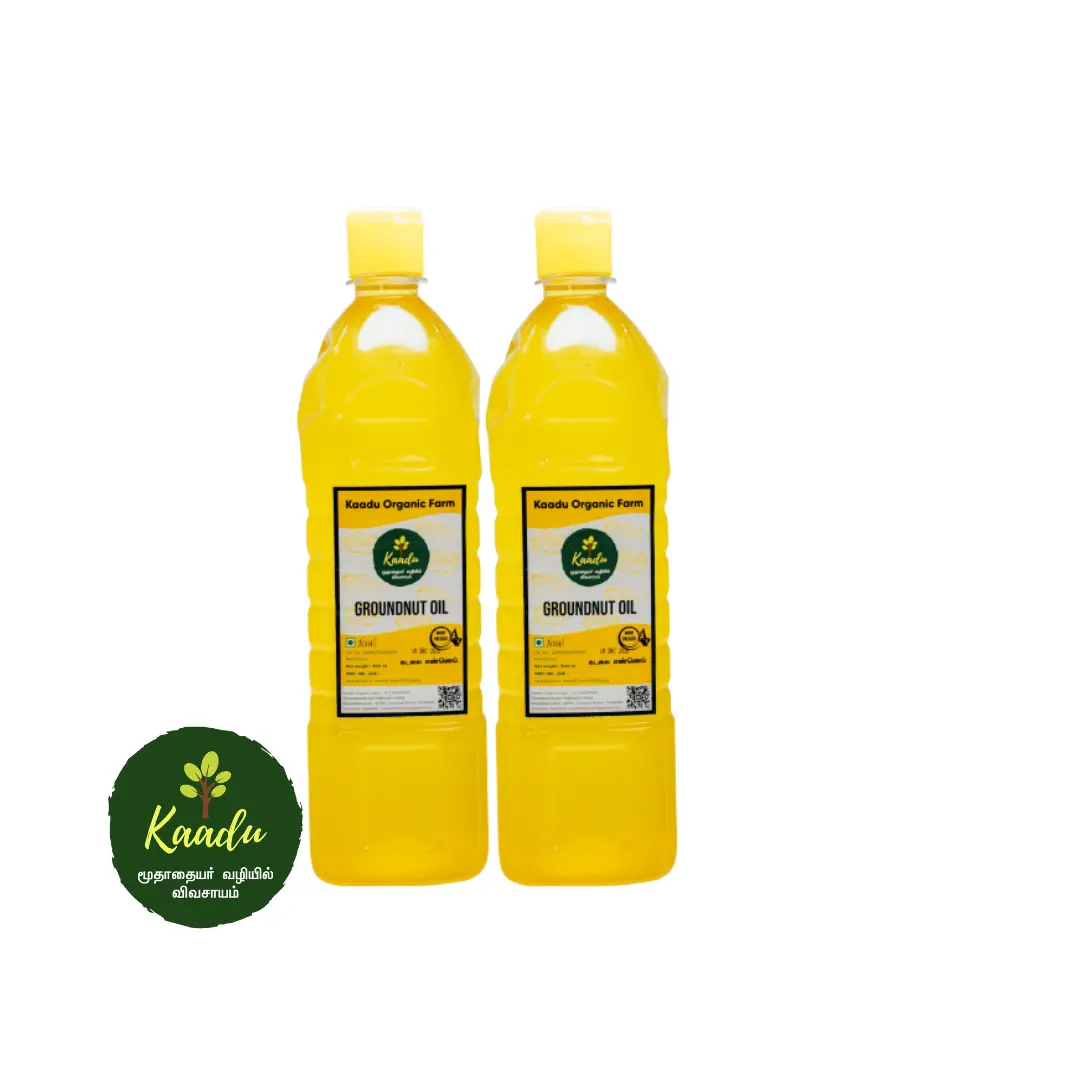
For example, when choosing organic cooking oil, check the type of oil and whether other ingredients have been added. When buying organic spices or other packaged food products, check whether the ingredient list matches your needs.
Keep these points in mind:
- Choose products with clear and easy-to-understand ingredient information.
- Check for added sugar, salt, flavourings or preservatives where relevant.
- Review allergen information if you have a food allergy.
- Compare similar products to understand their ingredients.
- Check whether the product matches your dietary preferences.
Do not assume that every organic product has no additives or preservatives. The ingredients and processing methods can differ from one product to another.
Checking the ingredient list helps you choose wisely rather than depending only on promotional claims.
4. Choose a Reliable Online Organic Store
The website you buy from is just as important as the product itself. A reliable online store should provide clear information about its products, sourcing, customer support and delivery policies.
Before placing an order, spend a few minutes checking the website.
Look for the following details:
- A clear business name and contact information.
- Detailed product descriptions and ingredient information.
- Product labels or images that are easy to read.
- Transparent prices and delivery charges.
- Clear return, refund and replacement policies.
- Customer reviews that help you understand the buying experience.
You can also check whether the store explains where its products come from and how they are handled before delivery.
Be careful if a website makes large claims but provides very little information about the product or seller. A professional-looking website alone is not proof of product quality.
Choosing a store that shares useful and verifiable information can make online shopping easier and more reliable.
5. Check Freshness, Packaging and Shelf Life
When shopping for organic food online, product freshness matters.Even a well-made product may not meet your expectations if it is old, damaged or stored incorrectly.
Before ordering, check the product’s manufacturing or packing date, best-before date or expiry date, depending on the type of product and its labelling requirements.
Also check whether the seller provides information about storage and handling.
For packaged food products, look for:
- Properly sealed packaging.
- Clear manufacturing and expiry details, where applicable.
- Instructions for storage after opening.
- Suitable packaging for the product.
- Information about how the product will be delivered.
For example, oils may need protection from heat and light, while certain food products need moisture-resistant packaging. The right packaging depends on the product.
After delivery, inspect the package before using it. If the seal is broken, the packaging is damaged or the product appears spoiled, contact the seller and follow the relevant food safety guidance.
6. Compare Price, Quantity and Value
Organic products may cost more than some conventional alternatives. This can happen because of farming practices, certification, processing, sourcing and other costs. However, a higher price does not automatically mean better quality.
Instead of choosing the cheapest or most expensive product, compare the available options.
For a fair comparison, check:
- Price per kilogram, litre or other suitable unit.
- Net quantity of the product.
- Organic certification and ingredient details.
- Packaging quality.
- Freshness and shelf life.
- Delivery charges and minimum order requirements.
For example, two organic cooking oils may have different prices because their ingredients, quantities or production methods differ. Comparing the details helps you understand whether the price difference is reasonable.
If you are new to a product, consider buying a smaller pack first. This allows you to check the taste, quality and suitability before purchasing a larger quantity.
The best choice is a product that meets your requirements, fits your budget and provides clear information about its quality.
7. Read Customer Reviews Carefully
Customer reviews can help you understand other people’s experiences with a product. They may provide information about packaging, taste, delivery, product quantity and customer service.
However, do not consider overall star rating.
When reading reviews, look for specific details. For example, a review that explains how the packaging arrived or describes the product’s taste may be more useful than a comment that simply says excellent.
You should also:
- Read both positive and negative reviews.
- Check whether the reviews refer to the same product and pack size.
- Look for repeated complaints about delivery or damaged packaging.
- Check whether the seller responds to customer concerns.
- Avoid treating customer reviews as proof of organic certification.
Reviews are useful for understanding the buying experience, but certification and product labels should be checked separately.
8. Understand Product Sourcing and Traceability
Knowing where a product comes from can help you make a more informed purchase. Some online stores share information about the farmers, producers, processing units or suppliers involved in making their products available.
This information can help you understand the product’s journey from its source to your home.
When checking product sourcing, look for details such as:
- The name or location of the producer, where available.
- Information about the ingredients and their origin.
- Applicable certification and verification details.
- Processing and packaging information.
- The seller’s approach to quality checks.
Not every product page will provide all these details. However, a store that communicates clearly about sourcing and product handling makes it easier for customers to ask questions and assess its claims.
For certified organic food, traceability is an important part of the applicable organic certification systems. If you are unsure about a product’s organic status, seek clarification from the seller or consult the relevant official resources.
9. Start With the Organic Products You Actually Need
When exploring organic products online, it is easy to add many items to your shopping cart. However, buying everything at once may not be practical, especially if you are new to organic shopping.
Start with products you already use regularly. This makes it easier to compare prices, understand product quality and decide what works for your household.
For example, you may begin with organic pulses, spices, cooking oils or other everyday food products. Choose categories based on your regular needs rather than buying something only because it is trending.
Before placing your order, ask yourself:
- Will I use this product regularly?
- Do I understand its ingredients and storage needs?
- Is the pack size suitable for my household?
- Does the price fit my budget?
- Have I checked the label and seller information?
Buying according to your needs helps reduce waste and makes it easier to manage your shopping budget.
10. Check Delivery, Storage and Return Policies
Online shopping does not end when you place an order. Delivery conditions, storage instructions and customer support also matter.
Before purchasing, check the expected delivery time, shipping charges and the seller’s policy for damaged, incorrect or expired products.
After receiving the order, follow the storage instructions on the packaging. Some products need to be kept in a cool, dry place, while others may require refrigeration after opening.
Keep these simple practices in mind:
- Inspect the package when it arrives.
- Check the product details and date information.
- Store the product according to the label.
- Close the package properly after use.
- Contact customer support if there is a quality or delivery issue.
These steps can help you maintain product quality and have a better online shopping experience.
Common Mistakes to Avoid When Buying Organic Products Online
A few simple mistakes can make it harder to choose the right product.
Buying only because the packaging looks natural: Green colours, leaves and pictures of farms do not prove that a product is organic.
Ignoring certification details: Check the applicable certification marks and product information instead of relying only on the product title.
Choosing only by price: Compare ingredients, quantity, packaging and certification before deciding.
Believing every health claim: Organic status does not automatically mean a product is more nutritious or can prevent or treat a disease.
Ignoring storage instructions: Incorrect storage can affect the quality and shelf life of food products.
Buying large quantities without checking: Start with a smaller pack when trying an unfamiliar product, if available.
Avoiding these mistakes can help you shop with greater confidence.
Conclusion
Choosing the best organic products online becomes easier when you know what to check. Start by understanding organic labels, checking applicable certification details, reading the ingredients and comparing products from reliable sellers. Also consider freshness, packaging, price, customer reviews and storage instructions before placing an order.
There is no need to buy everything at once. Start with the products you use regularly, compare the available options and choose items that suit your needs and budget.
When shopping online, clear product information and verified claims are more useful than attractive packaging or big promises. Taking a little time to check these details can help you make more confident buying decisions.
Shop Organic Products Online at Kaadu Organics
Looking for quality organic products for your everyday needs? Explore the range of products available at Kaadu Organics and find options that suit your household. Check the product details, compare your choices and shop online with confidence.
Explore our products today!
Frequently Asked Questions
1. How can I identify genuine organic products online?
Check the product label, applicable organic certification marks, manufacturer details and FSSAI information where required. For Indian organic food products, consult the official Jaivik Bharat portal if you need to verify the available certification or business information.
2. Are organic products always better than conventional products?
Not necessarily. Organic certification relates to how a product is produced under applicable standards. Overall quality, nutrition, taste and suitability depend on the specific product and other factors.
3. Is a natural product the same as an organic product?
No. The terms do not mean the same thing. A product described as natural is not automatically certified organic. Check the label and supporting certification information before buying.
4. What should I check before buying organic food online?
Check certification, ingredients, packaging, shelf life, seller details, price, customer reviews and delivery policies. These details help you make a more informed choice.
5. How do I choose an organic online store?
Choose a store that provides clear product information, relevant certification details, transparent pricing, customer support and understandable delivery and return policies.
6. Are expensive organic products always better?
No. A higher price does not guarantee better quality. Compare the quantity, ingredients, certification, packaging and other product details before making a decision.