How to Choose Millets for Breakfast, Lunch and Dinner
Millets have been part of traditional Indian cooking for generations. From ragi dosa in the morning to jowar roti for lunch and millet khichdi for dinner, these grains offer different ways to prepare everyday meals. However, choosing the right millet can sometimes be confusing, especially if you are introducing them into your family’s regular diet for the first time.
Each millet has its own taste, texture, cooking time and culinary uses. Some work well in porridge and dosa batter, while others are suitable for rice-style dishes, rotis and one-pot meals.
The good news is that you do not need to change your entire food routine to enjoy millets. Understanding their basic uses can help you select suitable varieties for different meals.
Why Does Choosing the Right Millet Matter?
Not every millet gives the same result when cooked. Some grains become soft and fluffy, while others have a slightly firm texture. Similarly, millet flour behaves differently from whole millet grains when used in cooking.
For example, finger millet is commonly used in dosa, porridge and roti preparations. Foxtail millet can be cooked as a rice alternative or used in upma. Jowar flour is suitable for traditional flatbreads.
Choosing according to the recipe makes cooking easier and helps you enjoy the natural flavour of each grain.
1. Best Millets for Breakfast
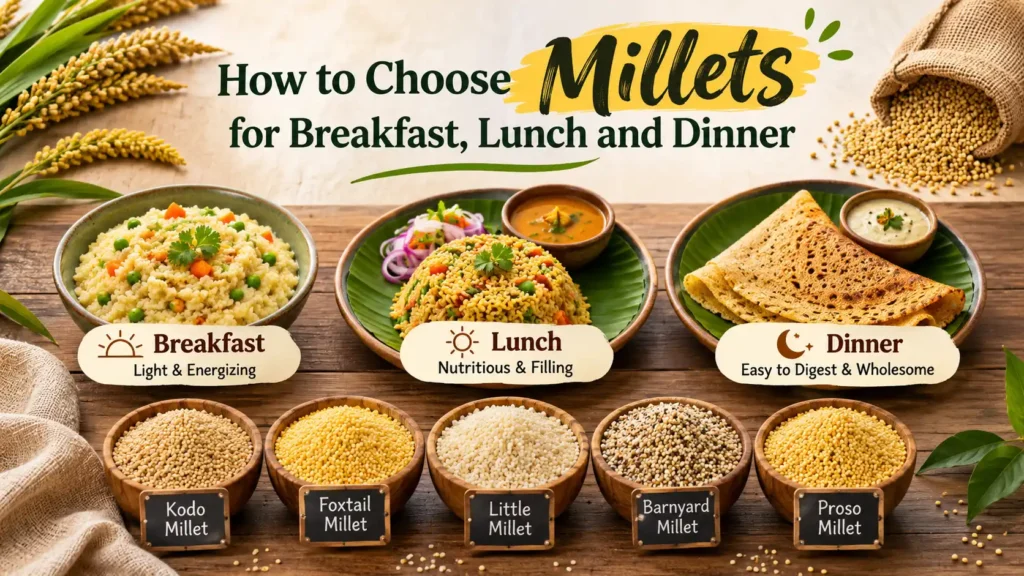
Breakfast is a good time to experiment with millet-based dishes because several varieties can be prepared as porridge, dosa, idli, upma and pancakes.
Here are some options to consider.
Finger Millet (Ragi)
Finger millet, commonly known as ragi or kelvaragu in Tamil, is widely used in South Indian kitchens. Its earthy flavour makes it suitable for both sweet and savoury breakfast preparations.
Breakfast ideas:
- Ragi dosa
- Ragi idli
- Ragi porridge
- Ragi malt
- Ragi pancakes
Finger millet is particularly known for its calcium content. It can be a useful addition to a varied diet, especially when prepared with other nutritious ingredients.
Foxtail Millet (Thinai)
Foxtail millet has a mild flavour and works well in several familiar breakfast recipes. It is a practical choice for people who want to explore alternatives to regular rice-based preparations.
Breakfast ideas:
- Foxtail millet upma
- Thinai pongal
- Foxtail millet idli
- Millet vegetable kichadi
- Foxtail millet dosa
You can combine it with vegetables, pulses and spices to prepare a filling breakfast.
Little Millet (Samai)
Little millet has a relatively mild taste and can be used in recipes where rice is traditionally included.
Breakfast ideas:
- Samai idli
- Little millet dosa
- Samai pongal
- Vegetable upma
- Little millet kichadi
Its versatility makes it a convenient option for households that prefer familiar breakfast dishes.
Pearl Millet (Kambu)
Pearl millet, known as kambu in Tamil, is commonly used in traditional Indian food preparations. It has a distinct flavour and works well in both fermented and non-fermented recipes.
Breakfast ideas:
- Kambu koozh
- Kambu dosa
- Kambu porridge
- Kambu adai
For a simple breakfast, you can prepare pearl millet porridge and adjust its consistency according to your preference.
2. Best Millets for Lunch
Lunch usually includes a combination of grains, vegetables, pulses and other side dishes. Millets can fit naturally into this combination when selected according to the type of meal you want to prepare.
Foxtail Millet for Rice-Style Meals
Foxtail millet is a useful option for preparing meals similar to regular rice dishes.
Lunch ideas:
- Foxtail millet vegetable rice
- Thinai lemon rice
- Foxtail millet curd rice
- Millet sambar rice
Its mild flavour allows it to pair with traditional South Indian accompaniments such as sambar, rasam, poriyal and curd.
Kodo Millet (Varagu) for Everyday Meals
Kodo millet is another variety that can be prepared as a cooked grain. It has a slightly distinct texture and can be used in several traditional rice-based recipes.
Lunch ideas:
- Varagu vegetable pulao
- Kodo millet sambar rice
- Varagu tomato rice
- Kodo millet vegetable khichdi
Wash the grains properly and follow the cooking instructions provided on the product packaging to achieve the desired texture.
Jowar (Sorghum) for Rotis
Jowar, known as cholam in Tamil, is commonly used to prepare traditional flatbreads. Its flour is suitable for households that enjoy roti-based lunches.
Lunch ideas:
- Jowar roti
- Jowar bhakri
- Jowar vegetable paratha
- Jowar-based mixed flour roti
Serve jowar roti with dal, vegetable curry, greens or chutney for a balanced meal.
Pearl Millet for Traditional Lunch Preparations
Pearl millet is also used in traditional flatbreads and porridge-style preparations.
Lunch ideas:
- Kambu kali
- Kambu roti
- Pearl millet vegetable preparation
- Kambu-based adai
It offers another way to bring traditional grains into everyday meals.
3. Best Millets for Dinner
Dinner can include lighter preparations such as khichdi, dosa, vegetable upma and porridge. The choice of millet should depend on your appetite, recipe and preferred portion size rather than assuming that one variety is automatically suitable for everyone at night.
Barnyard Millet (Kuthiraivali)
Barnyard millet is commonly used in cooked grain preparations and one-pot meals. Its texture makes it suitable for several simple dinner recipes.
Dinner ideas:
- Kuthiraivali vegetable khichdi
- Barnyard millet pongal
- Vegetable millet upma
- Barnyard millet curd rice
Little Millet for Simple Dinner Recipes
Little millet can be used to prepare familiar dishes without making major changes to your cooking routine.
Dinner ideas:
- Samai vegetable kichadi
- Little millet pongal
- Samai dosa
- Little millet vegetable pulao
Ragi for Light Preparations
Ragi can also be included in dinner through simple flour-based recipes.
Dinner ideas:
- Ragi dosa
- Ragi roti
- Ragi vegetable adai
- Savoury ragi porridge
Adding vegetables, pulses or suitable protein-rich accompaniments can make these meals more complete.
4. Millet Selection Guide for Everyday Meals
Choosing a millet becomes easier when you understand which variety works with your preferred cooking method.
| Millet variety | Breakfast | Lunch | Dinner |
| Ragi | Dosa, porridge | Ragi roti | Ragi dosa |
| Foxtail | Upma, pongal | Millet rice, pulao | Vegetable kichadi |
| Little millet | Idli, dosa | Samai rice | Pongal, kichadi |
| Pearl millet | Kambu koozh | Kambu kali, roti | Kambu porridge |
| Kodo millet | Upma | Varagu rice | Vegetable khichdi |
| Barnyard millet | Pongal | Cooked millet meals | Vegetable kichadi |
| Jowar | Flour-based breakfast | Jowar roti | Jowar roti |
These are suggested culinary uses, not fixed meal rules. You can enjoy different varieties at any time of the day.
5. What Should You Check Before Buying Millets?
Before purchasing millets, pay attention to a few basic quality factors.
1. Check the grain appearance: Choose grains that look clean and free from visible insects, foreign particles and unusual discolouration.
2. Check the packaging: Prefer properly sealed food-grade packaging that protects the grains from moisture and contamination.
3. Read the product label: Check the millet variety, net weight, manufacturing or packing date, best-before date and storage instructions.
4. Choose the right form: Whole grains, flour, flakes and rava have different cooking applications. Select the form that suits your regular recipes.
5. Buy according to usage: If you are trying a new millet, start with a smaller pack before purchasing it in larger quantities.
6. Simple Tips for Adding Millets to Your Daily Diet
You do not have to replace every grain in your kitchen immediately. Start with one or two millet-based dishes and gradually explore other varieties.
- Replace regular rice with foxtail, little or kodo millet in selected meals.
- Try ragi dosa or millet upma for breakfast.
- Use jowar flour to prepare traditional rotis.
- Add vegetables and pulses to millet-based one-pot meals.
- Explore different varieties instead of depending on just one millet.
- Follow the cooking and soaking instructions for each grain.
Remember that a nutritious meal is about overall balance. Include vegetables, pulses, fruits, protein sources and other food groups along with millets.
Frequently Asked Questions
Which millet is best for breakfast?
Ragi, foxtail millet and little millet are useful choices for breakfast. They can be prepared as dosa, idli, porridge, pongal and upma.
Which millet can be used instead of rice?
Foxtail millet, little millet, kodo millet and barnyard millet can be prepared as cooked grain alternatives to rice. Cooking methods and water requirements differ between varieties.
Can I eat millets every day?
Millets can be included regularly as part of a varied and balanced diet. It is useful to rotate different grains and include other food groups rather than depending on a single millet.
Which millet is suitable for making roti?
Jowar, pearl millet and finger millet flours are commonly used for making different types of rotis. The texture and preparation method vary depending on the flour.
Should I soak millets before cooking?
Soaking can help soften certain grains and may reduce their cooking time. However, the requirement depends on the millet variety and recipe. Follow the preparation instructions for the grain you purchase.
Bring More Variety to Your Everyday Meals with Kaadu Organics
Choosing the right millet for breakfast, lunch and dinner can make everyday meals more nutritious and varied. From light breakfast options to filling lunch recipes and wholesome dinner choices, each millet offers different ways to add variety to your diet. Start with small portions, explore different recipes and choose millets based on your taste, cooking preferences and dietary needs.
If you are looking for quality millets for your daily cooking, explore the wide range of millets at Kaadu Organics and bring traditional grains into your everyday meals.