Palm Jaggery vs Cane Jaggery: How Are They Different?
Natural sweeteners have been part of traditional Indian cooking for generations. Among the popular choices, palm jaggery and cane jaggery are widely used in sweets, beverages and everyday recipes. Although both are traditionally prepared by concentrating natural plant juices, they come from different sources and have distinct characteristics.
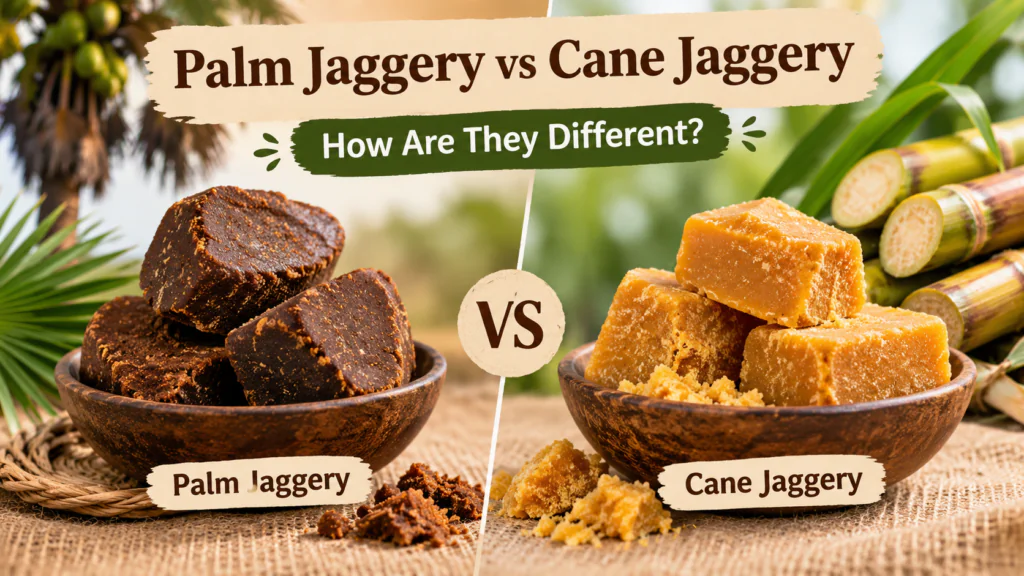
When comparing palm jaggery vs cane jaggery, the main differences include their raw materials, production methods, taste, colour, texture and nutritional composition. Understanding these differences can help you choose the right jaggery for your cooking preferences and daily food habits.
Let’s explore how these two traditional sweeteners are made and what makes each one different.
What Is Palm Jaggery?
Palm jaggery is a traditional natural sweetener prepared from the sap collected from palm trees, particularly palmyra and date palms. In Tamil Nadu, it is commonly known as Karupatti and has been used in traditional households for preparing sweets, beverages and other regional dishes.
Unlike cane jaggery, which comes from sugarcane juice, palm jaggery is made by concentrating palm sap through a traditional heating process. It is generally recognised by its dark brown colour, distinctive aroma and rich, slightly earthy sweetness.
Palm jaggery is valued for its traditional preparation methods and distinctive flavour. It is commonly used in South Indian cooking, especially in recipes where a deeper sweet flavour is preferred.
How Is Palm Jaggery Made?
Palm jaggery production involves collecting fresh sap from palm flower stalks. The sap is traditionally collected using specialised tapping methods.
The general preparation process includes:
- Sap collection: Fresh sap is collected from the flower stalks of suitable palm trees.
- Filtering: The collected sap is filtered to remove unwanted particles.
- Boiling: The filtered sap is heated in large vessels to remove excess water.
- Concentration: Continuous heating thickens the sap and develops its characteristic colour and flavour.
- Cooling and moulding: The concentrated mixture is allowed to cool and shaped into blocks or other forms.
The final product is a traditional palm-based sweetener that can be stored and used in different recipes.
What Is Cane Jaggery?
Cane jaggery is a traditional sweetener produced from sugarcane juice. It is also known as Vellam in Tamil and Gur in several Indian languages.
It is widely used across India for preparing traditional sweets, snacks, beverages and everyday food preparations.
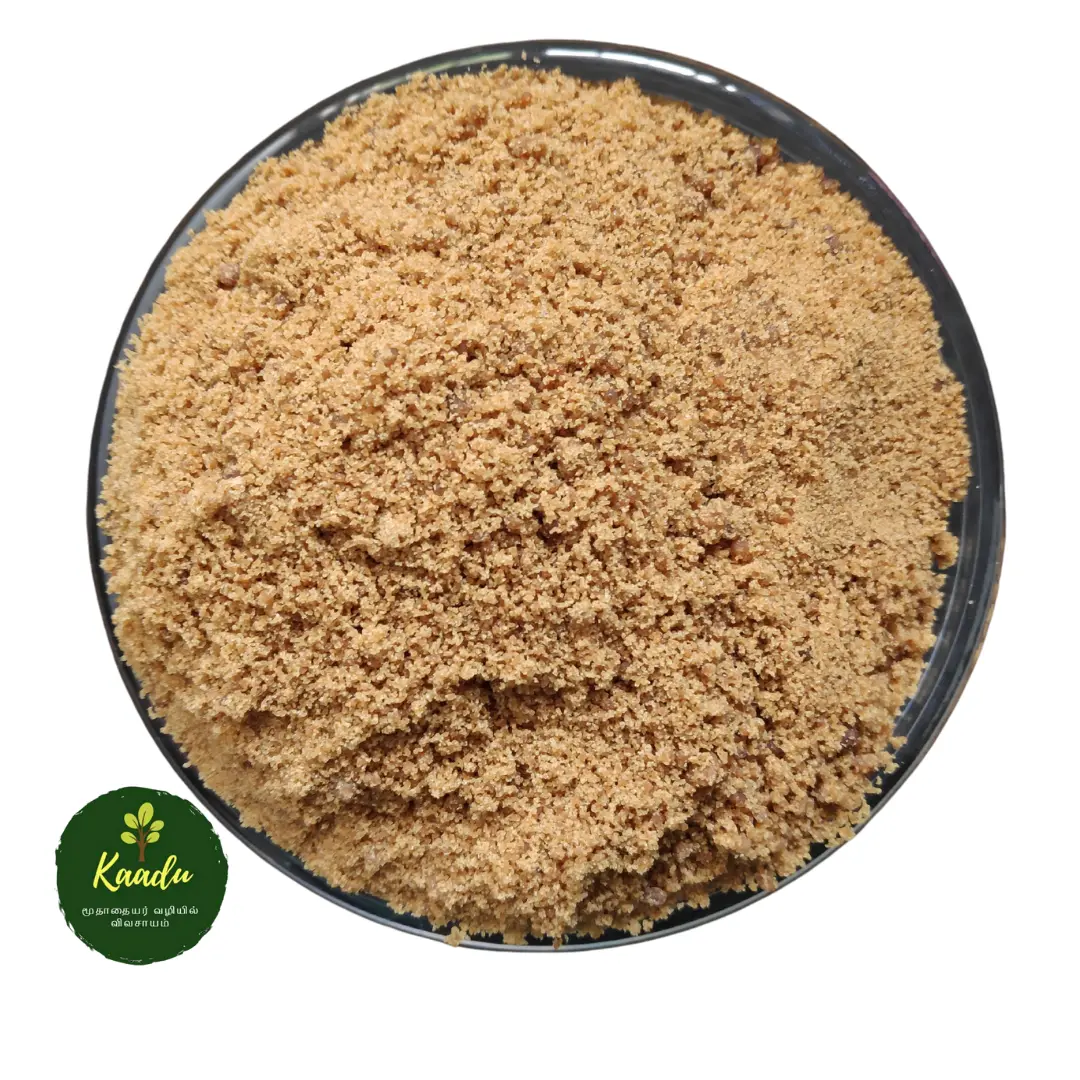
Cane jaggery generally has a golden yellow, amber or brown appearance, depending on the sugarcane variety, processing method and production conditions. Its taste is primarily sweet, with a mild caramel-like flavour.
Cane jaggery is produced in several regions of India and is available in solid blocks, powder and liquid forms.
How Is Cane Jaggery Made?
Cane jaggery is prepared by extracting and concentrating juice from freshly harvested sugarcane.
The general production process involves:
- Sugarcane harvesting: Mature sugarcane is harvested and transported for processing.
- Juice extraction: The sugarcane is crushed to extract its juice.
- Filtration: The juice is filtered to remove suspended impurities.
- Boiling: The filtered juice is heated to evaporate excess water.
- Concentration: The juice thickens as its moisture content decreases.
- Cooling and shaping: The concentrated mixture is cooled and formed into blocks or other marketable forms.
The resulting cane jaggery is used in many traditional Indian recipes.
Palm Jaggery vs Cane Jaggery: Key Differences
Although both products are traditional sweeteners, they differ in their source materials, preparation methods and sensory characteristics.
Here is a simple comparison of palm jaggery vs cane jaggery.
| Comparison Factor | Palm Jaggery | Cane Jaggery |
| Raw material | Palm tree sap | Sugarcane juice |
| Common name | Karupatti | Vellam or Gur |
| Colour | Usually dark brown | Golden yellow to brown |
| Taste | Rich, earthy and distinctive | Sweet with caramel-like notes |
| Texture | Depends on moisture and processing | Available in different textures |
| Production | Concentrated palm sap | Concentrated sugarcane juice |
| Common uses | Traditional sweets and beverages | Sweets, snacks and beverages |
| Availability | More regional and seasonal | Widely available across India |
The most important difference is their source. Palm jaggery comes from palm sap, whereas cane jaggery comes from sugarcane juice. Their individual flavours and characteristics make them suitable for different cooking applications.
Nutritional Differences Between Palm Jaggery and Cane Jaggery
One of the common questions about these sweeteners concerns their nutritional composition.
Both palm jaggery and cane jaggery contain naturally occurring sugars. They may also retain small quantities of minerals and other compounds from their original plant sources.
However, their nutritional composition is not identical. It can vary depending on the raw material, geographical origin, processing conditions and storage.
Research published in the International Journal of Food Science and Technology has examined the composition of sugarcane, palmyra-palm and date-palm jaggery. The findings show differences in sucrose, reducing sugars, protein and mineral composition.
Some important points include:
- Sugar composition: Both varieties contain substantial amounts of naturally occurring sugars, including sucrose, glucose and fructose.
- Mineral content: Palm and cane jaggery can contain minerals such as calcium, iron, phosphorus and magnesium in varying quantities.
- Protein content: Small differences in protein content have been reported between different jaggery varieties.
- Energy content: Both are energy-dense sweeteners and should be consumed in appropriate quantities.
It is important to understand that natural jaggery is still a source of sugar. Palm jaggery should not automatically be considered a low-sugar or diabetes-friendly alternative.
The nutritional value of a particular product depends on its composition and quality rather than simply its colour or name.
Taste, Colour and Texture Differences
Taste and appearance are two practical factors that help distinguish these traditional sweeteners.
Palm Jaggery
Palm jaggery usually has a darker brown appearance. Its flavour is rich, slightly earthy and distinctive. Depending on the preparation, it may have a deeper aroma that complements traditional South Indian recipes.
Its texture can range from firm blocks to softer varieties, depending on moisture content and storage conditions.
Cane Jaggery
Cane jaggery is available in different shades, ranging from golden yellow to dark brown. It generally has a straightforward sweet taste with mild caramel notes.
It can be found in solid blocks, powdered forms and semi-liquid varieties, making it convenient for different cooking requirements.
Neither colour nor texture alone can guarantee the purity of jaggery. Processing methods and storage conditions can influence both.
How to Use Palm Jaggery and Cane Jaggery in Daily Cooking
Both varieties can be included in traditional cooking, but their flavour profiles make them suitable for different recipes.
Uses of Palm Jaggery
Palm jaggery is commonly used in South Indian food preparations, including:
- Karupatti coffee and traditional beverages.
- Palm jaggery payasam.
- Traditional sweets and homemade snacks.
- Sweetening certain porridges and millet-based preparations.
- Traditional recipes that require a deeper sweet flavour.
Its distinctive taste can add a different flavour dimension to recipes.
Uses of Cane Jaggery
Cane jaggery is widely used in Indian cooking for:
- Traditional sweets such as adhirasam.
- Pongal and payasam preparations.
- Jaggery-based snacks and desserts.
- Homemade laddus and traditional sweets.
- Sweetening beverages and selected everyday recipes.
Both can be used as alternatives to refined sugar in suitable recipes, although the quantity and final taste may need adjustment.
Which Is Better: Palm Jaggery or Cane Jaggery?
The answer depends on your food preferences, cooking requirements and the flavour you want in your recipes.
Palm jaggery is a suitable choice when you prefer a distinctive earthy sweetness and want to explore traditional palm-based food products. It works particularly well in recipes where its characteristic flavour is appreciated.
Cane jaggery is a practical choice when you need a widely available traditional sweetener for everyday Indian cooking. Its familiar sweetness makes it suitable for several desserts and homemade preparations.
When choosing between palm jaggery vs cane jaggery, consider the following:
- Choose palm jaggery for its distinctive flavour and traditional South Indian applications.
- Choose cane jaggery for its versatility and widespread availability.
- Check the ingredients, food safety information and quality of the product.
- Use either variety in moderation as part of a balanced diet.
Neither variety should be treated as a medicinal product or a sugar-free alternative.
How to Choose Good-Quality Jaggery
Selecting good-quality jaggery is important for both taste and food safety. Different products may vary in their processing methods, purity and storage conditions.
Here are a few points to consider before purchasing:
1. Check the ingredients: Look for products with clearly stated ingredients and avoid products with unclear ingredient information.
2. Check the manufacturer: Choose products from manufacturers who provide transparent product details and appropriate food safety information.
3. Examine the packaging: Prefer properly sealed food-grade packaging that protects the product from moisture and contamination.
4. Check the product label: Review the manufacturing date, best-before date, storage instructions and applicable FSSAI licence details.
5. Store it correctly: Keep jaggery in a clean, dry and airtight container according to the manufacturer’s storage recommendations.
Choosing a reliable source is more important than judging purity based only on appearance.
Final Thoughts
Understanding the difference between palm jaggery and cane jaggery helps you make better choices when preparing traditional foods. Both are valued for their distinctive flavours, traditional preparation methods and culinary applications.
While palm jaggery offers a rich, earthy flavour derived from palm sap, cane jaggery provides familiar sweetness from sugarcane juice. Rather than considering one universally better than the other, choose according to your recipe, taste preferences and product quality.
Exploring traditional sweeteners is also a way to appreciate the diversity of India’s food culture and regional culinary practices.
Frequently Asked Questions
1. What is the main difference between palm jaggery and cane jaggery?
The main difference is their source. Palm jaggery is prepared by concentrating sap collected from palm trees, while cane jaggery is made by boiling and concentrating extracted sugarcane juice.
2. Is palm jaggery healthier than cane jaggery?
Both contain natural sugars and may provide small amounts of minerals. Their nutritional composition varies with processing and quality. Neither should be considered a sugar-free or medicinal food.
3. Can palm jaggery be used instead of cane jaggery?
Yes. Palm jaggery can replace cane jaggery in many traditional recipes. However, its stronger flavour and sweetness may change the final taste, so the quantity can be adjusted according to the recipe.
4. Why is palm jaggery darker than cane jaggery?
Palm jaggery often has a darker appearance because of the characteristics of palm sap and the concentration and heating process used during preparation. However, colour can vary depending on production methods and does not independently establish product purity.
5. Are palm jaggery and Karupatti the same?
Karupatti is the commonly used Tamil name for palm jaggery, particularly the variety made from palmyra palm sap.
6. Does palm jaggery contain sugar?
Yes. Palm jaggery contains naturally occurring sugars, including sucrose, glucose and fructose. It is a sweetener and should be consumed in moderation.
7. Can both types of jaggery be used in beverages?
Yes. Both palm jaggery and cane jaggery can be used to sweeten beverages. Palm jaggery is particularly popular in traditional Karupatti coffee, while cane jaggery is used in several traditional drinks.