Wood-Pressed Sesame Oil with Palm Jaggery: Complete Guide
What Is Wood-Pressed Sesame Oil with Palm Jaggery?
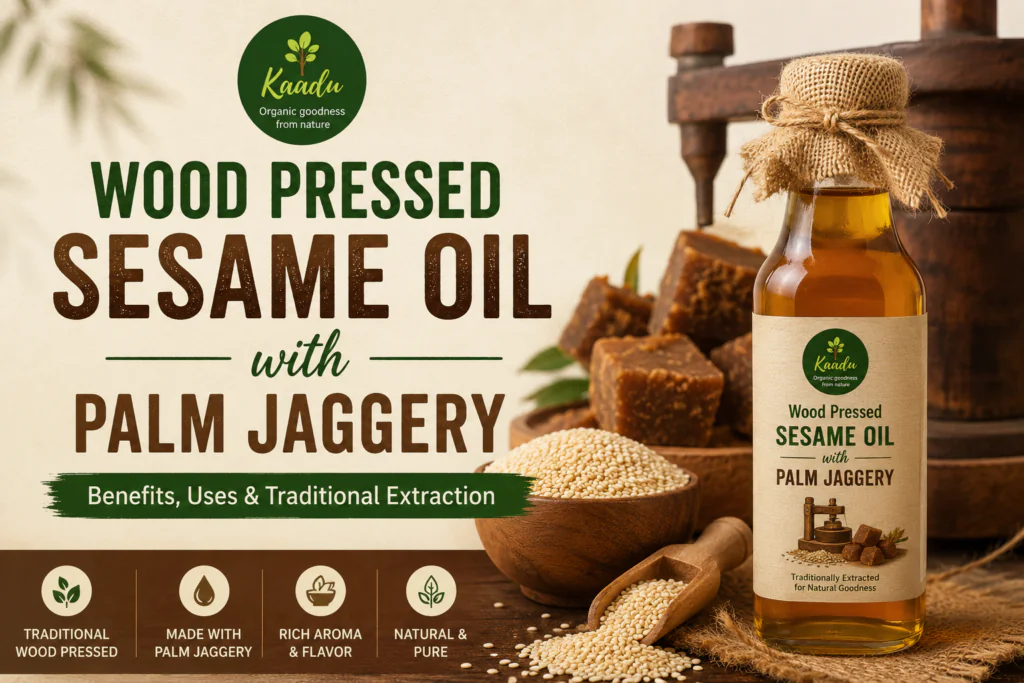
Sesame oil using a wooden press process mixed with palm jaggery is unrefined edible oil made by pressing sesame seeds through a wood press, with the addition of a little palm jaggery in the extraction process. The final product contains aroma, flavor and heat-sensitive nutrients in the seeds, thus differentiating it from refined oils. This article is for people who are new to this kind of product.
Key Points at a Glance
- Extraction is mechanical, below roughly 50°C, without solvents, bleaching or deodorising.
- Palm jaggery has a functional role in extraction and adds mild sweetness.
- The oil contains sesamin, sesamolin, sesamol and vitamin E as tocopherols.
- Suited to daily cooking, tempering, raw finishing, pickling, massage and oil pulling; not to prolonged deep frying.
- Contains no preservatives, so storage cycles are shorter than for refined oil.
How Mara Chekku Extraction Works
The sesame seeds are put into a wooden mortar and are then pressed by a very large wooden pestle, which revolves slowly, the oil squeezing out from the seeds due to the mechanical force applied. The device is called mara chekku in Tamil, while it is known as kolhu or ghani in other parts of India.
There are two important aspects about this equipment: firstly, the wood is a bad conductor of heat, and secondly, it revolves slowly. This helps to keep the temperature of the oil low during the process of extraction, which usually is less than 50°C.
Wood-Pressed vs Refined Processing
The process for the refined oils differs greatly. Standards for refined vegetable oils in India have established a procedure to be followed and have defined the maximum permissible level of hexane, indicating that solvent extraction is a normal process in refining. The high temperature used in the refining process causes most of the nutrient loss, especially vitamin E and antioxidants.
Inside a Working Chekku Mill: What We Observed
In a small mill near Coimbatore, there were three features which could be noticed. The first feature was that the process was slow with one batch taking nearly an hour; the miller said speeding up the process increases heat and lowers quality in terms of aroma, which is a trade-off between yield and quality which buyers do not normally get. The oil produced came out warm but not hot, as was claimed for the product category.
Why Palm Jaggery (Karupatti) Is Added During Pressing
It is important to note that karupatti or palm jaggery does not solely act as a sweetener. It is used in a very small amount together with the seeds and is found to facilitate the separation process by allowing proper movement in the press. This results in rounder oil, which is not as bitter as the others. Palm jaggery is made using palm sap and consists of iron, calcium, magnesium, and potassium together with antioxidants, where the iron content depends on the species of palm, soil, and method of processing . The glycemic index of palm jaggery lies in the range of 35-41 against that of refined sugar at 65 .
Taste and Aroma: What to Expect
The aroma itself is the first thing that sets it apart, which is warm, nutty, and slightly roasted, easily noticeable upon first opening and even more so when heated. It has a hint of a sweet aftertaste, more reminiscent of the classic Tamil sweets rather than an artificial sugar addition. While the refined oil aims for sensory neutrality, this one aims to do the exact opposite, and therefore a shift from it is expected.
Health Benefits of Wood-Pressed Sesame Oil with Palm Jaggery
Two distinct factors are relevant: the intrinsic composition of sesame, and the extent to which low-temperature extraction preserves it.
Sesamin, Sesamol and Vitamin E Content
These include sesamin and sesamolin, which are lignans; sesamol, which is a phenolic antioxidant; vitamin E in various forms of tocopherols; and phytosterols. Various literatures have reviewed their properties as having antioxidant, anti-inflammatory, and hypocholesterolemic activities, as well as contributing to oxidative stability of the oil.
Sesame Oil for Cholesterol and Blood Pressure
According to published literature, sesame oil has been linked to low density lipoprotein cholesterol reduction, as well as cardiovascular benefits associated with lignans and tocopherols
The evidence for blood pressure should be treated with caution. In a 2026 meta-analysis, modest but statistically significant decreases in both systolic and diastolic pressure were identified, along with small changes in fasting glucose and HbA1c levels , while another controlled study found that sesamin taken in a dose of 60 mg per day for 4 weeks reduces systolic pressure by 3.5 mmHg and diastolic by 1.9 mmHg (PubMed). Yet, another 2025 review identified no significant effect on blood pressure (clinical evidence review).
Does Refined Oil Have More Vitamin E?
In one human trial, women taking unrefined sesame oil for four weeks saw an increase in serum gamma-tocopherol of 42%. The key factor here is that the oil was unrefined: nutrients not lost in processing are usable by the consumer, which is the key nutritional point for cold pressing.
Sesame Oil for Hair, Skin and Massage
Sesame oil, otherwise referred to as gingelly oil, nallennai and til oil, has traditionally been used in massages of the head and body in South India. The vitamin E and fats in the oil lend themselves to this use, as does sesamol, which has shown anti-ultraviolet and wound-healing properties (MedicineNet).
Safety Information, Allergens and Potential Users to Consider
This is a food item, not a medicine, and it comes with all the energy density of a cooking oil. Sesame is a known allergen. People with diabetes, high blood pressure and heart disease need professional advice before altering their diet.
How to Use Wood-Pressed Sesame Oil in Daily Cooking
- Daily South Indian cooking. Poriyal, kootu, sambar, kuzhambu, dosa and uthappam, where its sweetness complements tamarind and chilli.
- Raw finishing. A small quantity over hot idli or curd rice presents the aroma most clearly.
- Pickle preparation. Historically the preserving medium in South Indian lemon and mango pickles.
- Topical massage. Applied slightly warmed to scalp or body before bathing.
- Oil pulling. One teaspoon swished for eight to ten minutes, then discarded.
Smoke Point and Safe Cooking Temperatures
Unrefined sesame oil has a smoke point of approximately 177°C (smoke point reference), performing well in tempering, sautéing and shallow frying but not recommended for prolonged high-temperature deep frying.
Wood-Pressed vs Refined Sesame Oil: Comparison Table
| Attribute | Wood-pressed (mara chekku) | Refined |
| Extraction | Mechanical wooden press, low temperature | High temperature, commonly solvent-assisted, then bleached and deodorised |
| Aroma and flavour | Nutty and toasted, with mild sweetness from palm jaggery | Substantially neutral |
| Nutrient retention | Tocopherols, sesamin and sesamol largely preserved | Materially reduced by heat and processing |
| Smoke point | Approximately 177°C | Higher |
| Shelf life | Shorter; no preservatives | Longer |
| Best application | Daily cooking, tempering, topical use | High-temperature frying |
How to Buy and Store Chekku Sesame Oil
- Cloudiness and sediments should be expected. Unfiltered oil will be somewhat cloudy by nature, which indicates minimal processing and not spoilage.
- Check the smell. True chekku sesame oil will have a distinct smell of sesame; if there is no smell, further investigations are needed.
- Buy small quantities. For instance, 500 ml is sufficient for a family of three people to consume in six to eight weeks.
- Keep the oil away from heat and light and seal properly.
- Consider prices realistically. Cold pressing produces fewer grams of oil per kilogram of seeds; therefore, significantly lower prices compared to the market average need investigating.
- Process details are more important than terminology on the label. “Cold pressed” is not a compulsory term on Indian labeling.
Is Wood-Pressed Sesame Oil Worth Switching To?
Consistent use within the home led to three distinct results: food when ready had its own distinct flavor profile; consumption amounts were slightly lower because the flavoring oil works in less amounts; and the list of ingredients was limited to only sesame seed and palm jaggery. But realistic expectations should still be held, since the listed effects are progressive.
For those trying the category for the first time, a little sample bottle would be more than enough: try making just one type of cuisine and see how it turns out. The described item in this article – sesame seeds ground using a wooden press with palm jaggery combined into it – can be purchased from Kaadu Organics.
Frequently Asked Questions
Is wood-pressed oil the same as cold-pressed oil?
The categories overlap, as both avoid applied heat. Wood-pressed oil is produced specifically in a wooden press, and because wood conducts heat poorly, extraction temperatures are typically lower still.
Does the palm jaggery make the oil noticeably sweet?
The sweetness is mild and appears on the finish, moderating sharpness rather than dominating savoury preparations.
Is it suitable for infants and elderly users?
Sesame oil has a long tradition of topical use for both groups. For dietary use, consult a practitioner regarding allergies or existing conditions, as sesame is a recognised allergen.
Why does sediment form at the base of the bottle?
The oil is minimally filtered. Sediment reflects limited processing and does not indicate spoilage.
Can the oil be used for deep frying?
It is appropriate for tempering, sautéing and shallow frying. With a smoke point near 177°C, prolonged high-temperature deep frying is not advised.