Types of Idli Podi in South India: From Spicy to Sesame-Rich Flavors
Ask someone from South India how they like their idli, and you probably won’t get just one answer.
Some people want soft idlis with hot sambar. Some prefer coconut chutney. Some like tomato chutney. And then there are the people who don’t need anything complicated at all.
Give them hot idli, sesame oil, and a good spoonful of podi.
That’s enough.
There is something special about idli podi. It is spicy, slightly nutty, aromatic, and full of the roasted flavor of lentils and spices. It can turn a simple plate of idli into something you keep going back for.
But here’s something many people don’t realise: there isn’t just one type of idli podi.
Different families have different recipes. Different regions have their own flavors. Some pods are fiery hot, some are mild, some have plenty of sesame seeds, while others are made mainly with roasted lentils and red chillies.
So, if you love idli podi, there is a whole world of flavors waiting to be explored.
Let’s look at some of the traditional podi varieties and the ingredients that make each one special.
What Exactly Is Idli Podi?
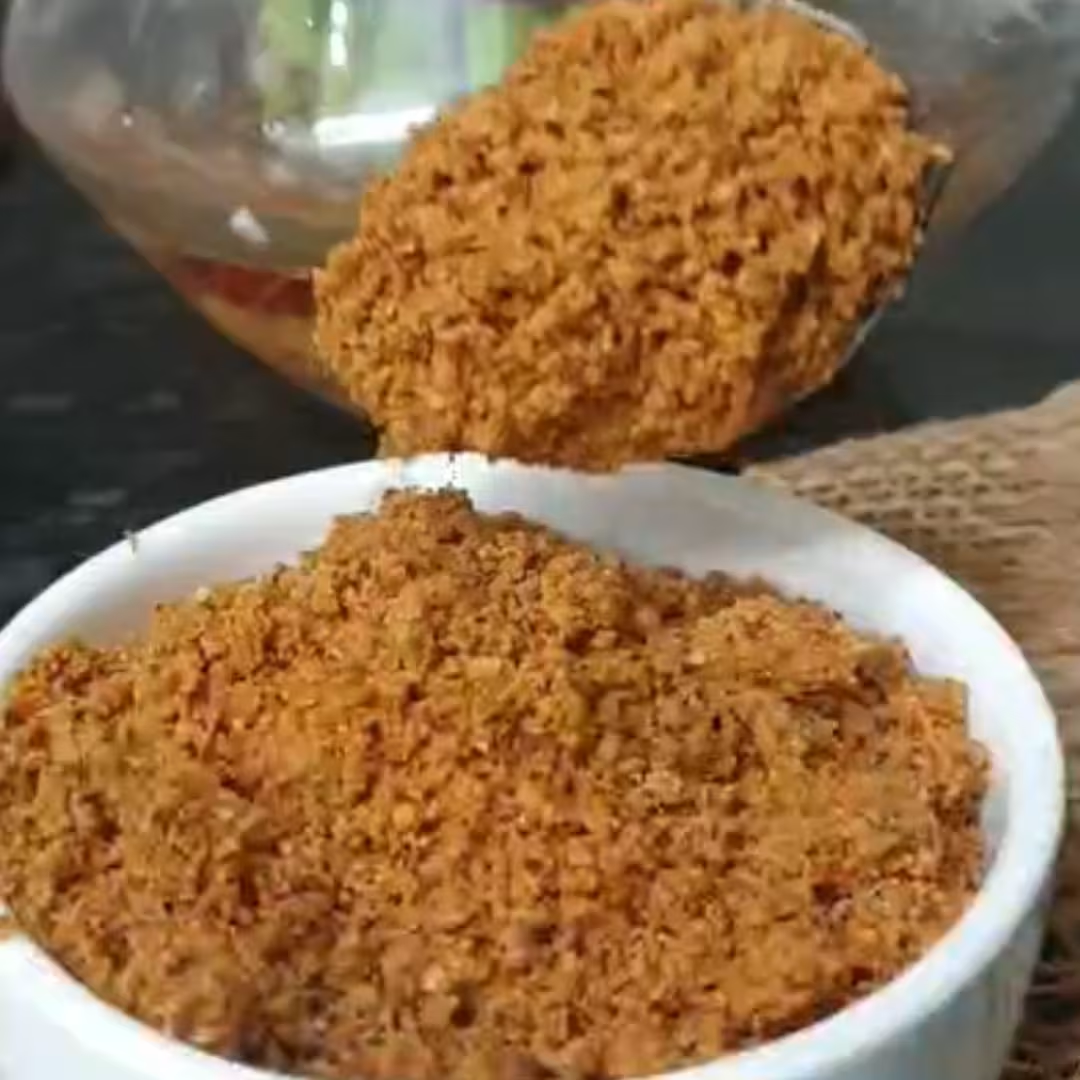
Idli podi is a dry spice powder traditionally served with idli and dosa.
The basic idea is quite simple. Ingredients such as lentils, dried red chillies, sesame seeds, and spices are roasted separately and then ground together. Salt is added to balance the flavour.
But the recipe can change from one kitchen to another.
One family may use more urad dal. Another may add chana dal for a slightly different texture. Someone might add sesame seeds for a nutty taste. Another person may add curry leaves for extra aroma.
That’s why homemade podi often tastes different from the podi made by another family.
There is no single recipe that everyone follows.
And that’s part of the fun.
Why Is Idli Podi So Popular in South India?
Idli is one of the most familiar breakfast foods in South India. It is soft, mild, and relatively simple in flavor.
Podi brings the opposite.
It adds heat, spice, roasted flavors, and a little crunch depending on how it is prepared.
The most loved combination is probably idli + podi + sesame oil.
Take a hot idli, add some sesame oil to your plate, mix in the podi, and dip the idli into it.
The warm idli absorbs the oil and carries the spicy powder with every bite.
It is such a simple combination, but for many people, it brings back memories of breakfast at home.
1. Classic Tamil Nadu Idli Podi
When many people hear the words “idli podi,” this is probably the style they imagine.
A traditional Tamil Nadu-style podi commonly includes roasted urad dal, chana dal, dried red chillies, and salt. Sesame seeds may also be included depending on the family recipe.
The ingredients are roasted until they develop a pleasant aroma and then ground into a powder.
The texture can be fine or slightly coarse.
The beauty of this podi is its balance. You get the nuttiness of roasted lentils, the heat from red chillies, and the earthy flavour of the spices.
It works beautifully with:
- Idli
- Dosa
- Uthappam
- Adai
- Paniyaram
And of course, a little sesame oil takes it to another level.
2. Sesame Idli Podi
If you love the taste of sesame, this is the podi to try.
Sesame seeds give the powder a deeper, nuttier flavour. They also add a slightly rich texture to the podi.
The sesame seeds are usually roasted before grinding. This is important because roasting brings out their natural aroma.
When sesame podi is mixed with sesame oil, the flavour becomes even stronger.
It is particularly good with hot idli because the mild taste of the idli allows the roasted sesame and spices to stand out.
For people who don’t want an extremely spicy podi, a sesame-rich version can be a nice choice because the nutty flavour helps balance the heat.
3. Andhra-Style Spicy Podi
If you enjoy spicy food, Andhra cuisine has plenty to offer.
Andhra-style spice powders can be bold, hot, and full of roasted flavours. Recipes vary widely between homes, but dried red chillies and lentils often play an important role.
Some versions may also include garlic or other spices.
This type of podi isn’t for someone looking for a very mild breakfast.
It is for the person who says, “A little more chilli, please.”
Andhra-style podis can be enjoyed with idli, dosa, rice, or other traditional foods.
A small amount can be enough because the flavour can be quite strong.
4. Garlic Idli Podi
Garlic gives podi a completely different personality.
Roasted garlic has a strong aroma and slightly sweet, earthy flavour. When combined with roasted lentils and red chillies, it creates a spicy powder with a deeper taste.
Garlic podi is especially popular among people who like bold flavours.
It goes well with:
- Idli
- Dosa
- Paniyaram
- Hot rice
You can also mix it with a little sesame oil to make a thick, spicy paste and use it as a side for your breakfast.
5. Curry Leaf Podi
Curry leaves are a familiar ingredient in South Indian kitchens. We normally hear them sizzling in hot oil during tempering, but they can also be used in podi.
Curry leaf podi has a lovely aroma and a slightly earthy flavour.
Fresh curry leaves are roasted until crisp and then ground along with lentils, chillies, and other ingredients.
This version is a good example of how one simple ingredient can completely change a familiar recipe.
If you have plenty of curry leaves at home, making curry leaf podi is also a great way to use them instead of letting them sit unused in the refrigerator.
6. Peanut Idli Podi
Peanuts can make podi richer and slightly creamier in flavour.
Roasted peanuts are combined with ingredients such as dried red chillies and lentils before being ground into a powder.
The result is nutty, spicy, and filling.
Peanut-based podi can be enjoyed with idli and dosa, but it can also be mixed with hot rice.
If you’re buying peanut podi, always check the ingredient list if you have a peanut allergy or are preparing food for someone who does.
7. Flaxseed Podi
Traditional podi recipes are also being adapted with ingredients such as flax seeds.
Flaxseed podi has a slightly earthy and nutty taste. The seeds are roasted before being ground with other ingredients.
Because flax seeds have a distinct flavour, this podi may taste different from the classic lentil-heavy podi.
It is a good option for people who enjoy experimenting with traditional recipes while adding different seeds to their diet.
The important thing is not to assume that adding one ingredient automatically makes a podi “healthy.” The overall recipe and portion size still matter.
8. Sesame and Lentil Podi
This is another lovely combination for people who enjoy roasted flavours.
Here, sesame seeds and lentils work together rather than one ingredient dominating the other.
The lentils provide the familiar roasted taste of traditional podi, while sesame adds a nutty note.
This type of podi is particularly good with sesame oil.
The combination can be as simple as:
Hot idli + sesame oil + sesame-lentil podi.
No fancy side dish is needed.
9. Spicy Red Chilli Podi
Some people don’t want their podi to be mild.
They want it to be properly spicy.
A chilli-forward podi uses dried red chillies generously along with roasted lentils and spices. The exact level of heat depends on the type and quantity of chillies used.
This is the kind of podi that makes you reach for another bite of idli even when you’re already full.
If you are making it at home, you can adjust the chilli level according to your family’s preference.
There is no need to make every podi extremely hot. A good podi should have flavour as well as spice.
10. Millets in Idli Podi
Millets have found their way into many traditional and modern Indian recipes, and podi is no exception.
Some recipes use millet-based ingredients or combine different grains and seeds with the usual roasted ingredients.
The result can have a slightly different texture and earthy taste.
This is especially interesting for families trying to include more traditional grains in their everyday food.
However, remember that a “millet podi” can mean different things depending on the recipe. Always check the ingredient list to know exactly what is included.
What Makes Each Podi Taste Different?
You might wonder how two podis made with similar ingredients can taste completely different.
There are several reasons.
The type of chilli
Different dried chillies can give different levels of heat, colour, and flavour.
How the ingredients are roasted
This makes a big difference.
Under-roasted ingredients may not have enough aroma, while over-roasting can give the podi a bitter taste.
The amount of lentils
Urad dal and chana dal can change the texture and roasted flavour.
Sesame seeds and nuts
These add richness and nuttiness.
Grinding texture
Some people like their podi smooth. Others prefer a slightly coarse texture so they can feel the roasted ingredients.
Family recipe
And finally, the biggest difference is often the recipe itself.
Ask five South Indian families for their podi recipe, and you may get five different versions.
Idli Podi Isn’t Only for Idli
Despite its name, you don’t have to stop at idli.
Try your favourite podi with:
Dosa
Spread a little sesame oil over a hot dosa and sprinkle podi on top. Fold it and enjoy.
Paniyaram
Podi goes particularly well with crispy paniyaram.
Adai
The spicy powder works nicely with the stronger flavour of adai.
Rice
Mix podi with hot rice and sesame oil for a quick meal.
Curd Rice
If you like a little spice with your curd rice, a small amount of podi can add an interesting twist.
Chapati
Some people even enjoy podi with chapati and a little sesame oil.
That’s the beauty of podi. A small jar can be useful for more than just breakfast.
How to Choose Good Idli Podi
If you’re buying idli podi online or from a store, don’t choose only by the packaging.
Take a look at the ingredients.
Look for familiar ingredients such as lentils, dried chillies, sesame seeds, curry leaves, spices, and salt, depending on the variety.
Also check:
- Ingredient list
- Manufacturing date
- Best-before date
- Storage instructions
- Packaging
- Spice level
- Quantity
If you’re buying online, product photos can tell you what the podi looks like, but the ingredient list tells you much more about what you’re actually buying.
A good food product should make its ingredients easy to understand.
Can You Buy Idli Podi Online?
Of course.
Buying idli podi online can be convenient, especially if you don’t have time to roast and grind the ingredients at home.
It is useful for working professionals, students, families living away from their hometown, and anyone who enjoys traditional South Indian flavours but wants something ready to use.
Before ordering, think about what kind of podi you actually enjoy.
Do you want something:
- Mild?
- Very spicy?
- Sesame-rich?
- Garlic-flavoured?
- Peanut-based?
- Traditional lentil podi?
Once you know your preference, choosing becomes much easier.
How to Enjoy Idli Podi the Traditional Way
Let’s come back to the simplest method.
Make hot idlis.
Take a small plate.
Pour a little sesame oil.
Add your favourite podi.
Mix them together.
Now take a piece of hot idli and dip it into the mixture.
That’s it.
You don’t need a restaurant-style breakfast. You don’t need ten side dishes.
Sometimes, the best food is the food that reminds you of home.
For many South Indian families, idli podi is exactly that.
Why Traditional Podi Still Has a Place in Modern Kitchens
Our food habits are changing quickly.
We have instant breakfast mixes, ready-to-eat meals, packaged snacks, and countless options available with a few clicks.
But convenience doesn’t have to mean forgetting traditional food.
Podi is one of those simple foods that fits perfectly into a busy lifestyle.
You can prepare it at home and store it, or you can buy idli podi online and keep it ready for breakfast.
It takes almost no preparation.
Hot idli is ready?
Take the podi.
Dosa is ready?
Take the podi.
Leftover rice?
Podi can help there too.
It’s simple, versatile, and familiar.
Final Thoughts
There is no single best idli podi.
Some people will always choose a fiery chilli podi. Some will prefer sesame. Others may reach for garlic, curry leaves, peanuts, or a family recipe that nobody outside their home knows how to make exactly.
That’s what makes South Indian podi so interesting.
The ingredients may be simple, but the flavours can be completely different.
And perhaps that’s why idli podi has stayed in our kitchens for so long.
It doesn’t need a complicated recipe.
It just needs a few roasted ingredients, the right balance of spice, and a hot idli waiting on the plate.
At Kaadu Organics, we love these simple food traditions. Our approach is inspired by the flavours that have always been part of South Indian homes, where good food is often about simple ingredients, careful preparation, and recipes worth passing from one generation to another.
So the next time someone asks you what you want with your idli, don’t just say sambar or chutney.
Maybe try a different podi.
Add a little sesame oil.
Take one hot idli.
And find your favourite South Indian flavour.